
The biggest reason startups fail is lack of preparation. Getting into entrepreneurship is like entering into a relationship – easy to start, and only those sustain who take several aspects into consideration. Thinking that you can be successful by being an aggregator like Oyo and Ola, is like thinking you can be successful in IPL like Suresh Raina and Chris Gayle – most Cricketers don’t succeed yet we discuss only the success stories. One has to consistently work hard for many years, and everyone doesn’t have the temperament and ability required to succeed in sports. Same goes for entrepreneurship, which involves giving employment to people and is hence different from freelancing. Every day new challenges keep on coming, one has to have crocodile skin to face the challenges, while maintaining their health and creative side, usually making very little to no money in the initial years. On an average, one can make more money in a job, if they do their duty well and invest their salary at the right places.
There is no startup idea which will give you 100% success. You can improve your chances of success, by emulating ideas that others have done before and delivering in a better way. But it’s not as straightforward as it sounds, as we all have limited time to do things. Ideas are everywhere, execution is what matters. You can get ideas from the Internet, from people around you, observing problems in your vicinity, websites that help generate ideas for your startup, etc. You can’t execute all the ideas that you have, you need to pick one idea to begin with. You can even do what others are doing, and do it in a better way, that will have more chances of success, as compared to doing something totally new.
Which startup idea should you go ahead with and which are those you must reject?
Following is an approach you can follow, when you have ideas in mind and unsure of which one to go ahead with.
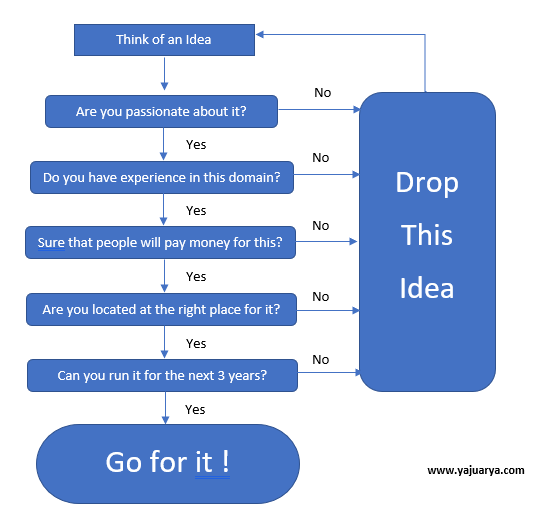
1 Are you passionate about it?
Lets take example of someone who asks you to start an ed tech startup, having people delivering lectures on your platform and you charging money for this. Similar to what Coursera, Udacity, etc. are doing. Are you passionate about it? If today was the last day of your life, will you be doing it? If the answer is no, meditate and think, what are the things that matter to you? Do something that you enjoy doing, otherwise soon after you’ve established your startup, you’re going to lose interest in it.
2 Do you have experience in this domain?
It’s always beneficial if you have experience in the domain you’re about to enter. That way you’ll be knowing inside things about what works and what doesn’t. Not only that, your credibility as an expert will be more. Like if you’ve been an AI Programmer, then try to start something on that. If you’re good at baking, you can very well start a bakery. Whatever you do, make sure you know about it, which is why all tech founders must know a bit of coding. Never be under assumption that you’re going to hire people and they’ll do all the work. If you do that, chances are high that your people can take you for a ride. They might take your code and do things you can’t imagine. I’ve seen restaurants closing down when their main chef ran away, keeping recipes to himself. By not knowing the intricacies involved, you’ll can be powerless and helpless, even for doing the smallest of things.
3 Sure that people will pay money for this?
You can share your idea with people. Ask them if they’d like to use it. If they say “yes”, ask them if they’ll be willing to pay money for it, and how much they’ll pay. This is a very important aspect that gets ignored a lot of times. You need not outsource market research to companies, you can do this yourself by identifying a list of 100 people who can be your potential customers. Share your idea with them, sign NDA if you feel like, and figure out how many of them will be your paying customers.
4 Are you located at the right place for it?
If you’re planning to raise money from VC’s, then you’ll have to base yourself close to where they’re located, instead of working from remote locations. Then there’s the case of perception, like how people trust perfumes made in Paris over those made in Jalalabad (say), even if the actual content of product is same. Further, you’ll be needing people to work for your company, you can’t expect everyone working in metro cities to relocate to places they haven’t heard of. And if you need local clientele for your work, then you have to be based close to them. Even though in IT, most work gets done offshore, yet the bigger projects come to those who have a local presence in the market they’re trying to avail work from.
5 Can you run it for the next 3 years?
Lastly, you have to think long term. Don’t just think about starting a company – think about maintaining it. Like if you start an ecommerce store for pet supplies, you’ll have to think about sourcing products from vendors at effective rates, managing refunds, handling returned orders on Cash on Delivery, addressing grievances from irate customers, dealing with attrition inside your company, protecting your IP, and so on. Motivation is required to keep you going, so it helps that your company has a clear vision on why you’re doing things and make sure everyone knows the unique problem you’re solving.
Make your startup dreams come true
If your answer to all of the above is ‘Yes’, then go ahead! And if it’s a no in any one step, then go back to the drawing board and think of another idea for your startup. Your time is limited, do what you want to do, that you’re good at, for which people will pay you money, with you being based at the right place, having intent to run it for long term. If you haven’t cracked the perfect idea yet then no worries, keep thinking and one day the right idea will come to you.
And if you still have some queries, feel free to drop them in the comments box below.
 Yaju Arya Dot Com