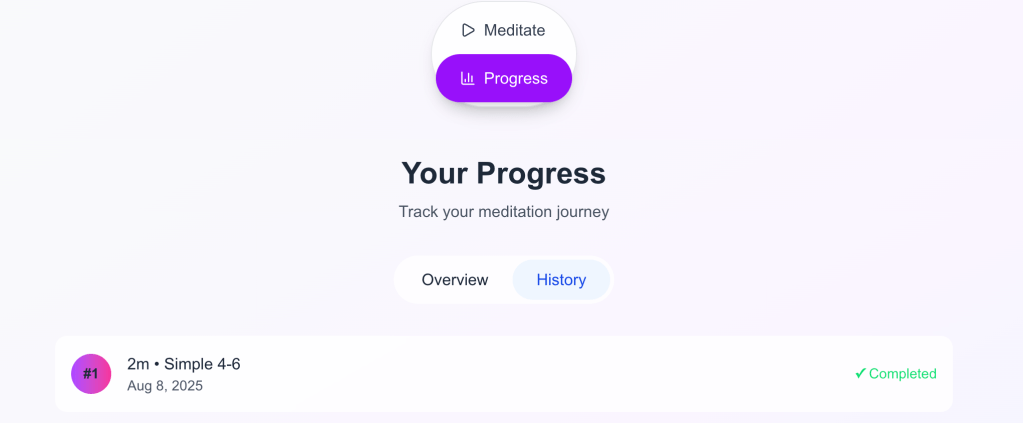
Stress-related issues are increasing in today’s fast-paced world. To promote good sleep and wellness among people, I created MindfulBreath. It is a web-based platform that would help users enhance their mental well-being. With a focus on rapid adoption, the app offers guided meditation and breathing exercises. My intent was to create a simple and impactful solution that would empower users to relax themselves, without depending on external substances. After conducting user research to understand their challenges and creating a prioritized feature list, I developed the MVP, now live at https://meditation-app-tawny-eight.vercel.app/. If MVP is successful then there are plans to onboard doctors to offer personalized care. This article contains PRD of my work done for MindfulBreath, for the product journey from user research till MVP launch. It also showcases how I used AI to speed-up work and my expertise in delivering user-focused healthtech solutions.
Product Requirements Document (PRD)
Click here to download the PRD in PDF format.
Overview
What is MindfulBreath?
MindfulBreath is a web-based platform designed to promote relaxation through guided meditation and breathing exercises.
- Problem: Stress and sleep disorders affect millions. Many meditation apps require downloads or lack personalization, and physicians struggle to prescribe non-pharmaceutical wellness plans.
- Solution: MindfulBreath offers immediate access to evidence-based breathing exercises with progress tracking, no login required.
- Vision: Stressed-out people will have a better sleep, and Doctors will be able to monitor progress without the need for regular intervention (post-MVP).
My Role: I did user interviews to understand pain points and then enlisted list of possible features. Prioritized features using the MoSCoW framework, and then developed a lean yet impactful MVP.
Objective:
Deliver a friendly and cost-effective web app to validate mental health benefits. Post-MVP, enable scalable doctor integration and mobile access based on user traction.
Value Proposition:
MindfulBreath delivers evidence-based meditation, personalized plans, and an intuitive experience. Users manage stress effortlessly, while post-MVP, doctors provide trusted, scalable care.
App Phases:
- MVP: Web-based app for guided breathing exercises, progress tracking, and streaks.
- Post-MVP: Doctor onboarding, mobile apps, and encrypted data storage.
Jobs to Be Done
For users facing stress and sleep problems.
- Scenario: A corporate employee is under work-related stress, impairing their sleep.
- Challenges:
- They consult someone who suggests sleep medication, but they prefer non-pharmaceutical solutions.
- They hesitate to download apps requiring personal details.
- Reading books or playing music doesn’t consistently ensure peaceful sleep.
- Sleep devices or pillows are often expensive and inaccessible.
- Consequences: Poor quality sleep impacts work performance as well as personal life.
- Desired Solution: A simple, evidence-backed website that is recommended by doctors.
My Contribution: I identified these user needs through research, shaping MindfulBreath to address them with a no-login, evidence-based platform.
Success Metrics
| Metric | Target (3 Months Post-MVP Launch) | Measurement Method |
|---|---|---|
| User adoption rate | 50% of targeted users engage weekly | Track unique sessions via Vercel Analytics |
| User adherence to exercises | 65% completion rate for meditations | Custom event tracking for session completions |
| User satisfaction | 75%+ positive feedback (NPS ≥ 40) | Post-session surveys via Typeform |
| Post-MVP doctor adoption | 2–3 clinics onboarded | Track clinic sign-ups via CRM |
| Data security | Zero security incidents | Regular audits with penetration testing |
Messaging and Credibility
Tagline: “Breathe Better, Live Better – Your Wellness Journey Starts Here”
User Messaging: “MindfulBreath provides guided meditation and breathing exercises to promote relaxation. Instantly accessible on any device.”
Doctor Messaging (Post-MVP): “MindfulBreath lets physicians prescribe wellness plans and monitor results remotely.”
Unique Selling Points (USP):
- Evidence proved breathing techniques.
- Responsive web platform without downloads.
- Prioritizes simplicity over complex features.
- Endorsed by doctors.
- Healthcare provider collaboration (post-MVP).
- Detailed tracking for users and doctors (post-MVP).
My Contribution: I secured doctor endorsements and designed features to align with evidence-based practices.
Want to see how I can design user-centric products for your team? Let’s discuss your next project!
Timeline/Release Planning
I began user discovery on June 16, 2025, conducting one month of interviews with stressed patients and doctors to understand their challenges. MVP development, including testing and bug fixes, took place from July 28 to August 8, 2025. Alpha testing yielded encouraging results, with users reporting immediate sleep improvements. The beta launch, involving 250+ pilot users and 3 healthcare providers for feedback and bug fixes, spans August 11 to September 18, 2025, extended to ensure robust collaboration with providers.
| Milestone | Timeline | Details |
|---|---|---|
| User Discovery | Jun 16–Jul 15, 2025 | Conducted interviews with patients and doctors |
| MVP Development, Testing & Bug Fixes | Jul 28–Aug 8, 2025 | Built MVP, executed 80+ test cases, fixed bugs |
| Beta Launch (Limited Users) | Aug 11–Sep 18, 2025 | Pilot with 250+ users and 3 healthcare providers, gather feedback, address bug fixes |
| Full MVP Launch | Sep 19–25, 2025 | Rollout to target audience, post-beta fixes |
| Post-MVP: Doctor Dashboard | Jan–Mar 2026 | Build web dashboard for plan assignment and tracking |
| Post-MVP: Data Migration | Feb 2026 | Migrate progress data to MongoDB/Postgres with encryption |
| Post-MVP: Mobile App MVP | Apr–Jun 2026 | Develop Android and iOS apps (login, reminders) |
MVP Timeline: 14 weeks (June 16 – September 25, 2025), 3 months usage to decide further course of action.
Post-MVP Development Timeline: 6 months (January – June 2026), to create doctor onboarding and mobile apps.
My Contribution: I designed the roadmap and test strategy, with validation.
Personas / User Roles
| Persona | Description | Needs/Goals |
|---|---|---|
| Patient | Stressed-out adults with sleep issues | Responsive web app, guided meditation, track progress |
| Doctor | General practitioners (post-MVP) | Prescribe plans, monitor adherence |
| Clinic Admin | Clinic managers (post-MVP) | Improve patient health, streamline operations |
Key Persona: Patient (drive MVP adoption).
My Contribution: Defined personas after user interviews, to align features with real needs.
User Scenarios
- Patient: Starting Meditation (MVP)
- Background: Vedika, 35, is working with a tech startup. She has a Master’s degree and committed to delivering her best. Passionate about tech, she enjoys reading novels in spare time.
- Motivations: Excellence, loyalty, career fulfilment.
- Frustrations: Company layoffs have increased workload. Promotions have been stalled. With rumours of more layoffs, Vedika is feeling stressed out.
- Goals: Vedika wants to sleep better and be more relaxed.
- My Contribution: Created the UI and prioritized features for increased user engagement.
- Doctor: Prescribing Plans (Post-MVP)
- Persona: Dr. Jagat, MD Internal Medicine.
- Scenario: Dr. Jagat assigns a meditation plan to Vedika via a web dashboard.
- Outcome: Dr. Jagat enhances care efficiently.
- Clinic Admin: Monitoring Engagement (Post-MVP)
- Persona: Sia, clinic manager.
- Scenario: Sia reviews 50% user engagement on the dashboard and shares feedback with doctors.
- Outcome: Sia improves patient outcomes.
User Flow for MVP:
- Patient opens the web app.
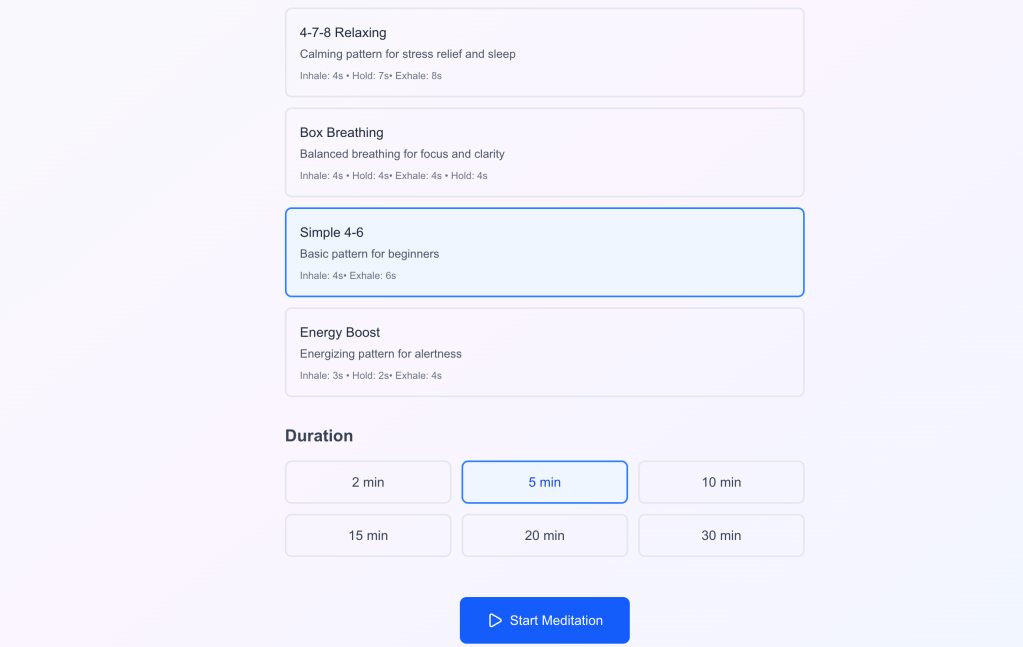
- Patient selects a breathing pattern (e.g. 4-7-8 relaxing).
- Patient chooses the time duration (e.g. 10 minutes).
- Patient starts the timer.
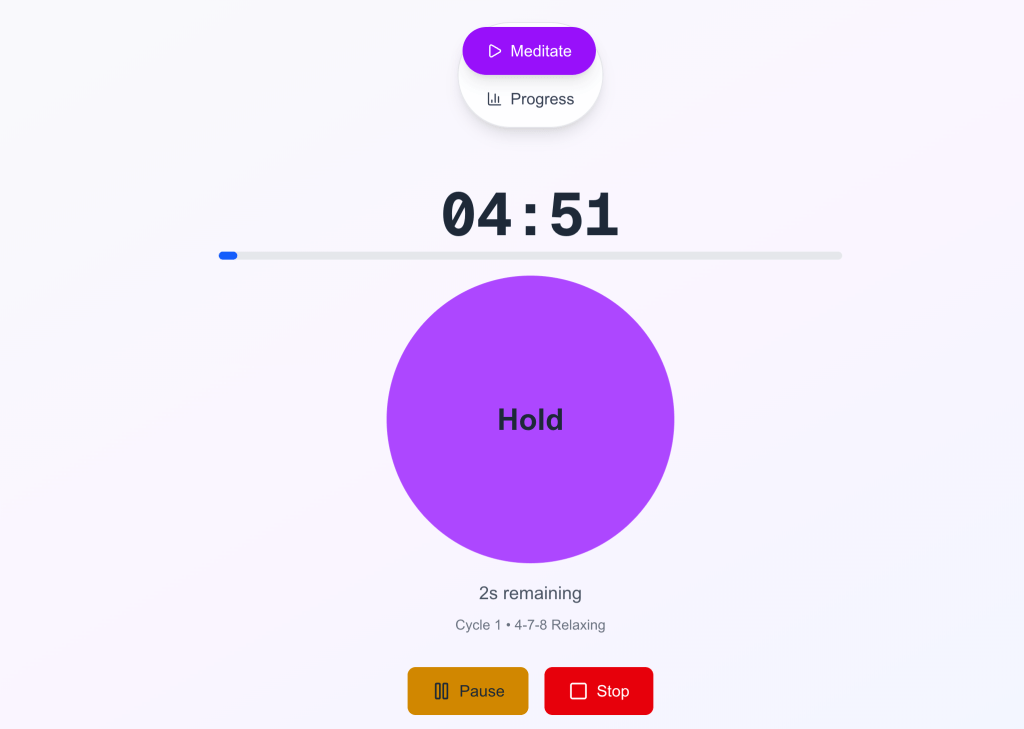
- App guides through breathing with visual cues (animated circle).
- Session completes with a gentle message.
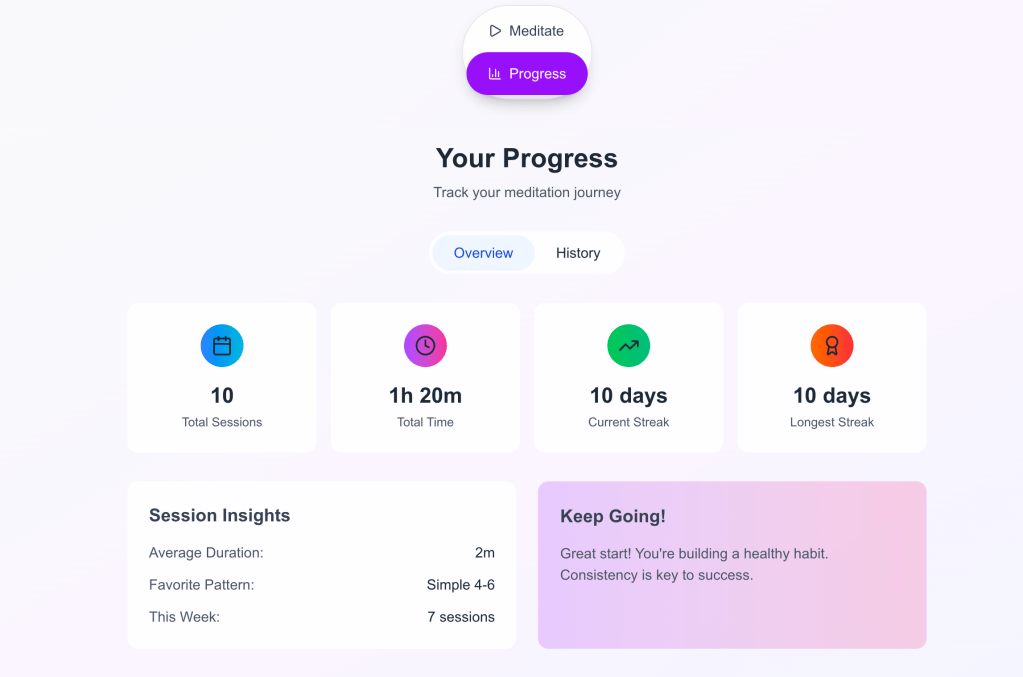
- Progress is saved and displayed (session count, streak).
- Post-MVP, patient can sign up for reminders and also get Doctor prescribed plan on the app.
My Contribution: I designed the user flow to ensure a seamless, intuitive experience.
User Stories and Features
Core MVP Features:
- Guided Breathing Exercises: 2/5/10/15/20/30-minute sessions for various breathing patterns (e.g., 4-7-8 pattern), each with a visual circle animation for inhale/exhale.
- Timer: Countdown to guide meditation duration.
- Progress Tracker: Session count and streak display, stored in browser’s local storage.
Post-MVP Features:
- User login for secure progress access.
- Email reminders for consistency.
- Doctor dashboard for prescribing and monitoring plans.
- Sleep quality logging for wellness tracking.
My Contribution: I created the feature list and prioritized using the MoSCoW framework to balance MVP needs with time-boxed efforts.
Excluded Features
| Feature | Reason for Exclusion |
|---|---|
| Wearables integration | High complexity, requires user investment. |
| Advanced AI recommendations | Resource-intensive, data privacy concerns. |
| Video-based meditation | High bandwidth and production cost, text/audio sufficient for MVP. |
| Social community features | Requires complex moderation. |
Designs
- Interface: Calming blues and whites with responsive elements. A visual breathing circle guides users through inhale/exhale phases, enhancing accessibility.
- Wireframes: Sketches for home screen, exercise player, and progress tracker.
- Feedback Plan: Gather usability insights from beta testing and user surveys.
- My Contribution: Created UX wireframes to create an intuitive, relaxed UI.
Technical Architecture
Tech Stack:
- Frontend: NextJS 14+ with App Router for a fast, modern web app.
- TypeScript: Ensures type-safe, reliable code.
- Tailwind CSS: Streamlines styling for a responsive, calming interface.
- Storage: Local storage for progress data (MVP); MongoDB/Postgres with AES-256 encryption (post-MVP).
- Notifications: Email-based reminders/push notifications (mobile apps) post-MVP.
- Hosting: Vercel for scalability.
- Budget: Ballpark range $45 – 85,000 (development: $30 – 60,000; tools and hosting: $5 – 10,000; buffer: $10 – 15,000).
Software Architecture (MVP):
[User Web App (NextJS)] ↔ [Local Storage (Browser)]
        ↓
[Timer & Breathing Guide (Tailwind CSS Components)]
Security:
- Local storage for MVP progress tracking.
- Post-MVP: TLS 1.3 (secure data transit), AES-256 for data at rest, audit logs.
My Contribution: I selected NextJS and Tailwind CSS for simplicity and scalability, and led cost-effective MVP development.
Product Delivery (post-MVP)
- Methodology: Agile with daily stand ups and bi-weekly reviews/stakeholder updates.
- Dev Team: 2/3 full stack developers, 1 UI/UX designer, 1 QA / Product Manager (me).
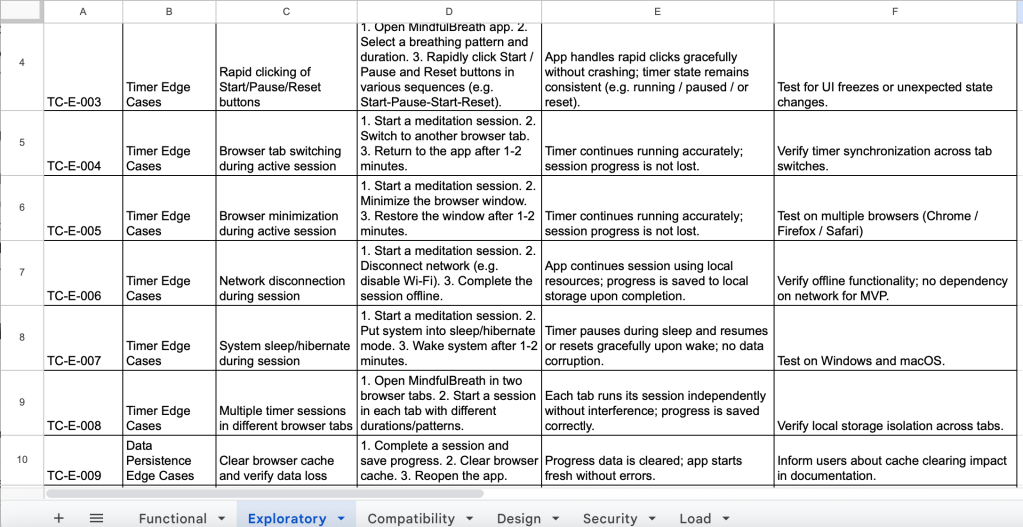
- QA Testing: TDD with functional, exploratory, compatibility, UI/UX, performance, and security.
My Contribution: Lead the project, manage sprints, and ensure quality.
Risk Mitigation
| Risk | Likelihood | Impact | Mitigation |
|---|---|---|---|
| Low user adoption | Medium | High | Responsive design, beta testing feedback. |
| Browser compatibility issues | Medium | Medium | Test on Chrome, Firefox, Safari. |
My Contribution: I identified risks and created mitigation strategies for a stable launch.
Next Steps
Alpha Testing was completed by August 8, 2025, 5 users reported immediate sleep improvements.
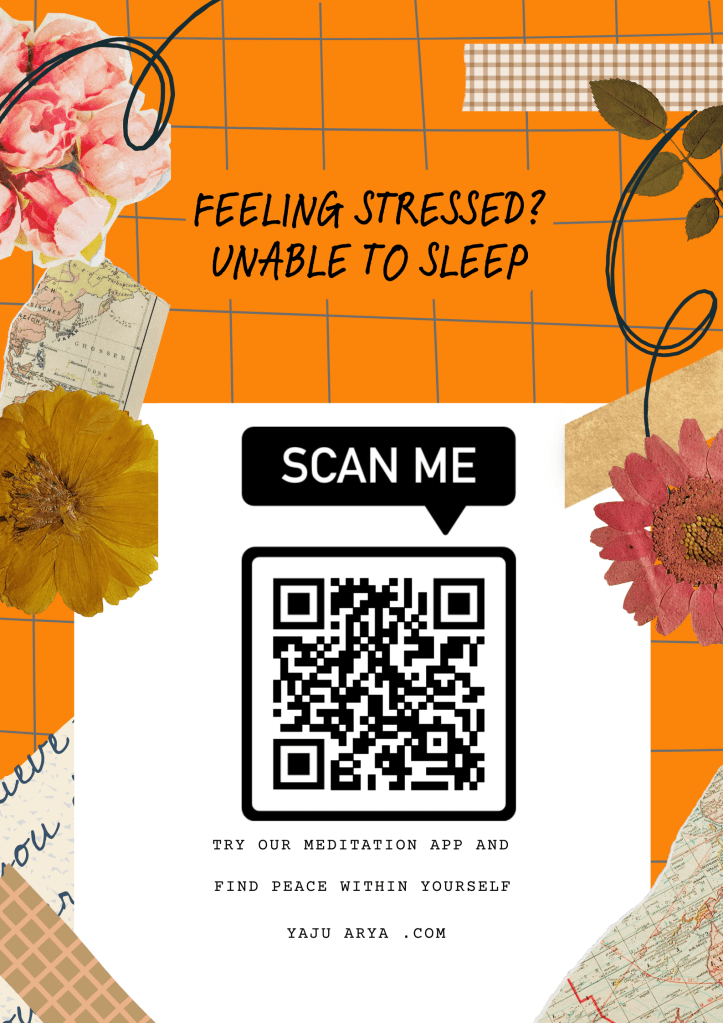
- Beta Testing: Targeting 250 unique users with posters at 3 healthcare providers, from August 11 to September 18, 2025.
- MVP Launch: To be done by September 25, 2025.
- Post-MVP Planning: Begin doctor integration and mobile apps by January 2026.
My Contribution: I designed the roadmap and test strategy to validate MindfulBreath’s impact.
How I Leveraged AI
I strategically used AI to enhance efficiency and quality throughout MindfulBreath’s development, saving significant time and costs while ensuring ethical oversight through human review. Here’s how I leveraged AI:
- After user interviews, I used AI to research other meditation apps, summarizing their features and reviews to identify any gaps.
- I drafted the initial PRD and used AI to refine its language, making it crisper and professional. AI also helped improve some section layouts for better readability.
- As I had clarity on what features I wanted, I used AI to generate code segments for MVP (e.g., timer logic, progress tracking). I would then review the code to make sure it was aligning with the user’s needs. This enabled me to independently develop a working prototype much earlier, saving weeks of development time and reducing costs.
- The project timeline was drafted using AI. Then I reviewed it and make necessary changes.
- Created the test cases and then asked AI for a second opinion. Then I organised them into a structured format, ensuring completeness.
- I used AI to assist in debugging, then would manually verify the quality and performance.
- AI drafted polished updates for stakeholders, which I refined to reflect my voice and project goals.
- I reviewed all AI outputs to avoid biases, ensuring authenticity and alignment with user needs. AI served as an assistant to accelerate tasks, not to replace critical thinking.
Skills Leveraged
- Technical Product Management
- User-centred design
- Feature Prioritization
- Product Backlog and Refinement
- Roadmapping
- QA Testing
Let’s Build Healthtech That Matters
I’m passionate about crafting products that improve lives. My work on MindfulBreath — from user research to MVP development — demonstrates my ability to deliver impactful solutions. Contact me if you’re seeking an experienced Technical PM to lead innovative projects and shape the future.