
At GoalSmacker, we started with a queue management tool that took an unexpected turn—one that helped save lives during peak COVID-19. What began as a retail solution in 2020’s first lockdown became GliderQMS, a mobile app for clinics that hit #1 on Google Play Store in 2021. My team pivoted to healthcare, sparked by doctors in my network, and we used Agile to deliver 20+ releases under tight deadlines. Here’s how we made it happen.
The Problem: A Retail Plan Meets a Bigger Need
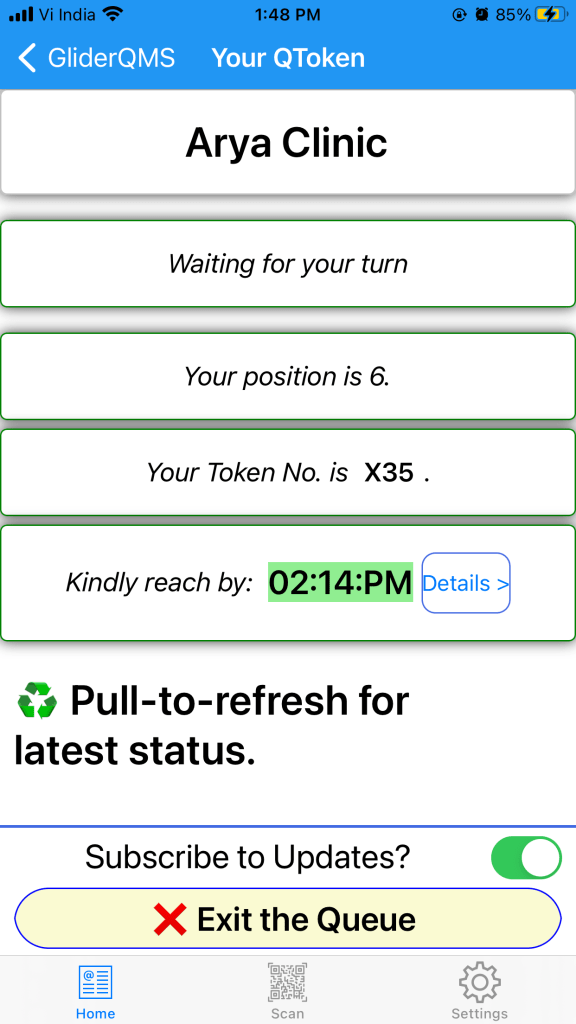
In early 2020, during India’s first lockdown, we sketched out a queue system for retail—think grocery lines in a shutdown. It fit the moment, but as restrictions lifted, I saw it wouldn’t hold; crowds would return, and the need would fade. Then I heard from doctors in my network that they were struggling—clinics packed, hours of waiting, no-shows gumming up appointments. Studies from that time showed crowded indoor spaces spiked infection risks by 20-30% in peak waves. That got me thinking: could we pivot to healthcare? A token system—patients grabbing spots remotely, seeing their queue, getting AI-estimated wait times—felt like a better fix than appointments alone.
What I Did: Pivoting with Purpose and Agile
I shared their feedback with the team—could we shift to clinics? They saw the potential, so I reached out to those doctors, got a Letter of Intent (LOI) signed to confirm the need, and we kicked off development. GliderQMS took shape as a mobile app for iOS and Android, aiming to ease crowding and keep people safer. But time was short—COVID-19 was surging in 2020-2021, and we were a distributed team starting from zero.
To move fast, we brought in Agile. We ran short sprints—1-2 weeks—focusing on basics like token generation first. We did daily standups, virtual across geographies, knowing what was ready and how much time it’d take. If a feature stumbled, we’d tweak our plan in a simple tool, then thinking about quick solutions. The intent was to keep it all smooth.
I also tested it like a patient as well as hospital staff. Like for a patient, I’d take a token, check the queue, see if the wait time clicked. If something lagged—like a slow refresh—I’d mention it to the team and fix before shipping. That habit came from wanting it to work for real people—like those doctors and their patients—not just on paper.
The Result: 20+ Releases, Real Impact
With the LOI in hand, we rolled out 20+ releases over two years. GliderQMS landed in clinics—patients stayed home until their turn, cutting exposure when it mattered most. By 2021, users loved it enough to rate it #1 among queue management apps on Google Play Store. That pressure cooker—demanding timelines, a new app—didn’t break us; it sharpened us. We delivered, and it felt good knowing it helped.
What I Learned: Listening Turns Ideas into Action
This taught me how a problem can spark something bigger. My doctor network pointed us to healthcare; the LOI gave us a green light. Agile kept us steady—short sprints, team syncs, and user tests turned a rushed pivot into solid releases. Working across timezones showed me how to adapt and stay calm, even with stakes high. GliderQMS wasn’t just about queues—it was about lives, and that drove us. It’s a lesson I’d take anywhere: hear the need, adjust fast, and deliver what counts.
 Yaju Arya Dot Com