
I recently led an initiative to launch a mental health startup in India. The goal was to create a privacy-first, no-login mental health wellness portal tailored for Indian users. It would feature Hinglish content, a counsellor directory, educational resources, and an AI-powered counsellor. My role involved validating this concept through user research, competitor analysis, and a scrappy-yet-usable Minimum Viable Product (MVP). This article outlines the product management process, key findings, and why early validation was a success.
Why This Idea? Testing the Waters in India
We saw India’s growing mental health needs and limited access to professional support as an opportunity. I chose to validate this idea because of its potential to address stigma and accessibility barriers using Hinglish, a widely used language blend in India. The no-login approach ensured privacy, encouraging hesitant users to engage. We decided to test the waters before committing to a costly full-scale launch, making early validation critical.
User Research: Validating the Need
I conducted interviews with a diverse set of people in multiple Indian cities. The user personas consisted of doctors, young entrepreneurs, mothers, and busy software engineers.
The research process turned out to be a challenge as mental health remains a taboo topic, and quite a few people hesitated to admit that they’re undergoing counselling. A few respondents shared that visiting a counsellor often results in antidepressants being prescribed which can continue for prolonged periods of time. Some users revealed that they often ended up visiting counsellors more frequently than intended, thereby increasing costs and time commitments. These insights confirmed the need for an anonymous, Hinglish-based platform offering immediate support along with a way to find trusted professionals.
Competitor Analysis: Spotting the Gap
I analyzed platforms which offered AI chatbots and counselling but often required logins or used English-heavy content. Few competitors leveraged local languages or prioritized anonymity. This gap validated our vision for a no-login, Hinglish-first portal with AI support, educational content, and a counsellor directory.
Jobs to Be Done: Understanding the Current Scenario
To design an effective solution, I mapped out the “jobs to be done” for users seeking mental health support in India:
- Several individuals feel sad or depressed but keep it to themselves due to fear of judgment.
- Sharing internal thoughts with family or friends often leads to judgment, thereby discouraging an open communication.
- Visiting a counsellor can be daunting as one needs to first find a trusted professional.
- Counselling often involves waiting times and multiple sessions before users feel comfortable opening up, taking up weeks or months.
- Counsellors mostly have fixed working hours, which conflicts with busy schedules of the user, leaving them without support late at night when they’re often alone and need to vent.
- Telephonic counselling exists, but users are unsure if they’ll speak to the same counsellor, disrupting the experience.
- Some users want to share anonymously without their conversations being traced.
- Without finding anyone to vent to, users face increased risks of heart disease and other ailments.
- Existing mental wellness apps require sharing personal details before using them, further deterring hesitant users.
- Most apps are in English, which isn’t understood by a lot of people in India.
- In the era of reels, users prefer consuming short-form content to improve their mood.
These insights were crucial in shaping the portal’s design, as per user needs.
Feature Prioritization Using MoSCoW Model
Based on user needs and market gaps, I prioritized features using the MoSCoW model to focus the MVP:
- Must Have:
- AI Counsellor in Hinglish: To provide immediate, culturally relevant support.
- Privacy-First: Chat without login to ensure anonymity and comfort.
- Interactive Website: A user-friendly platform.
- Should Have:
- Informative Content in Hinglish: Educational articles and videos to raise awareness.
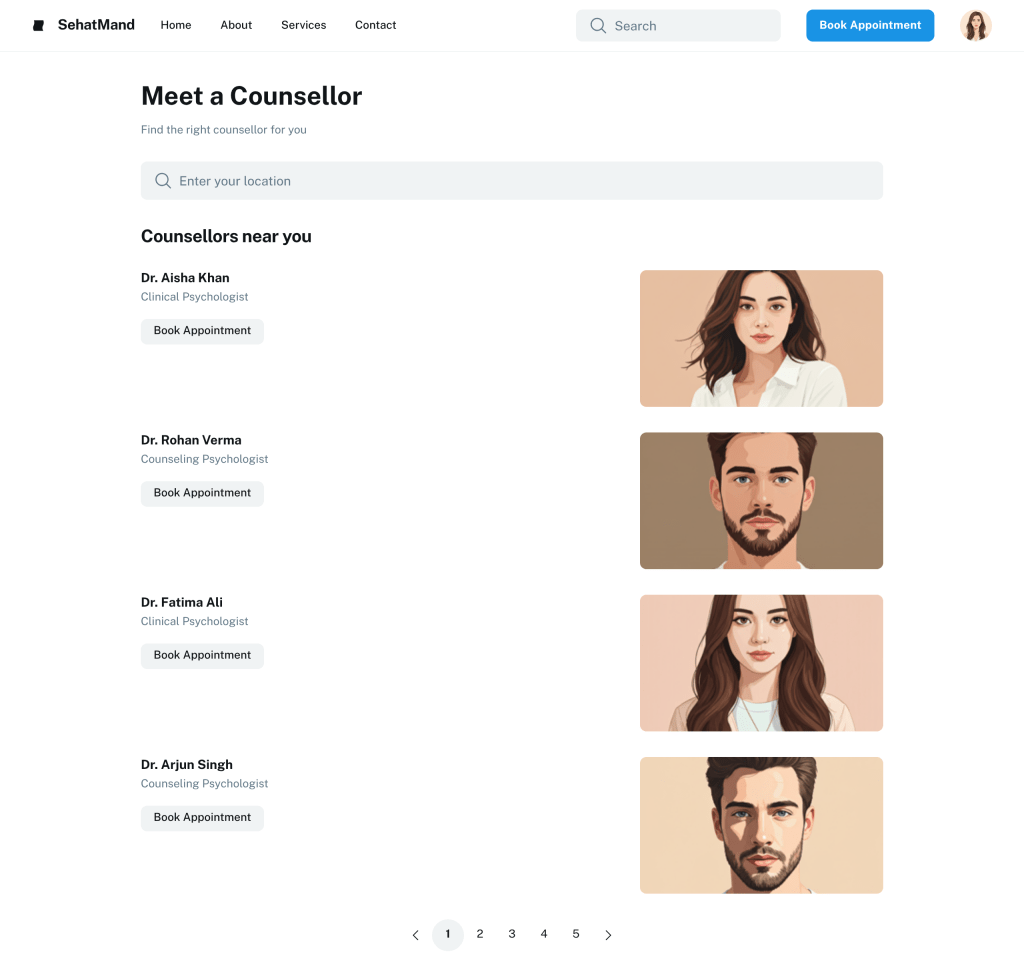
- Counsellor Directory: A searchable list of licensed professionals by location, curated for quality.
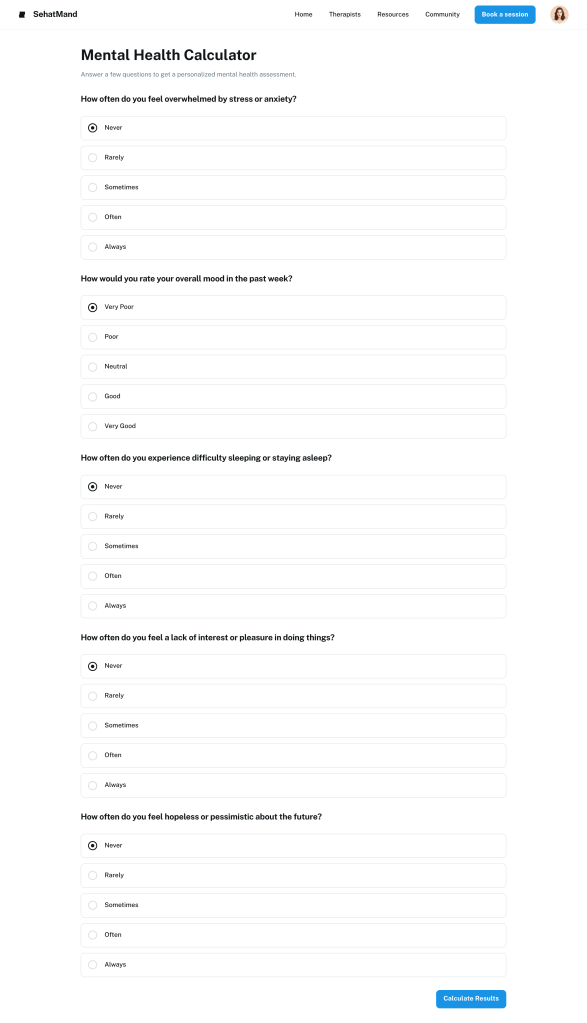
- Mental Health Calculator: To analyse whether a user needs mental health support or not.
- Could Have:
- Mobile App: For broader accessibility in future phases.
- Monetization Strategy (Phase 2): To explore sustainability options later.
- Vetting of Counsellors: To ensure quality and trust, though a bit time-taking.
- Daily/Weekly Reminders: To encourage users to share thoughts regularly.
- Won’t Have:
- Journaling Section (Scribe and Erase): Deemed non-essential for the MVP.
- Selling Affiliated Mental Health Products: To avoid commercial conflicts.
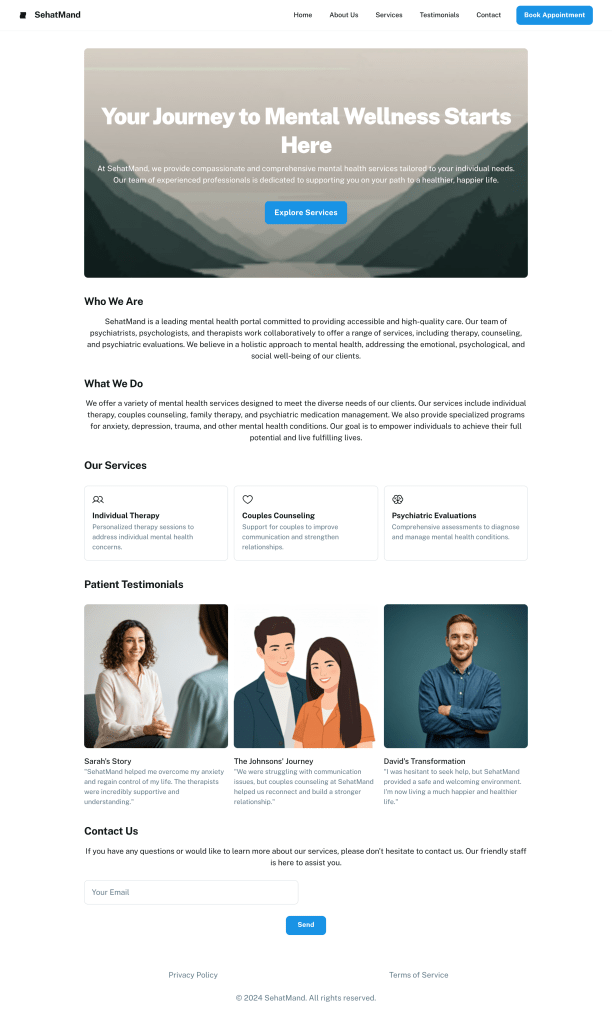
For the MVP, we focused on building a working prototype of the AI counsellor and mock-up designs for the website to test core functionality and user engagement.
MVP Development: Scrappy but Functional
To test the concept, I built an MVP in five weeks using a lightweight web framework. The MVP included:
- Hinglish Content Hub: Relatable articles and videos on mental health.
- Counsellor Directory: A searchable list of licensed counsellors by location.
- AI Counsellor: A chatbot in Hinglish chatbot for 24×7 empathetic support.
- Privacy-First Design: Chat without login required, ensuring anonymity.
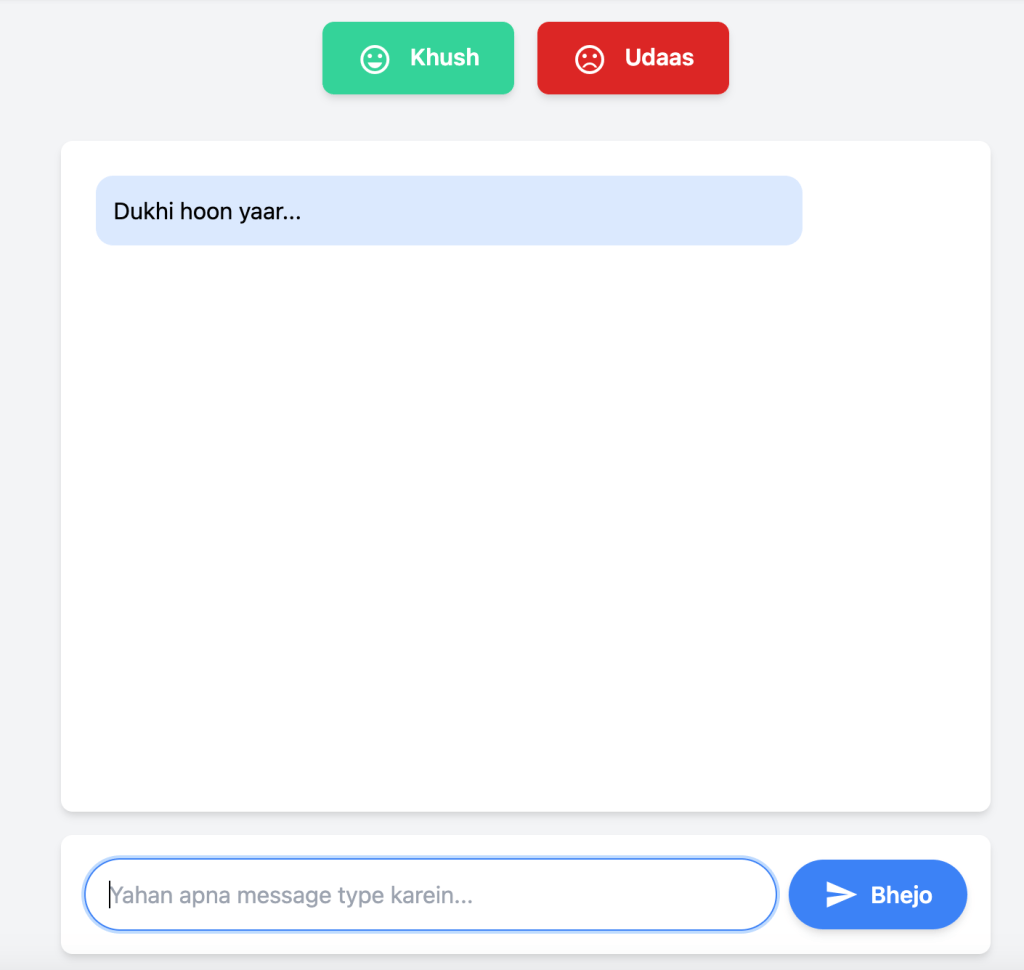
The MVP was lean but effective, intended to gauge user engagement with minimal resources.
Alpha Testing: Insights and Ethical Concerns
The MVP was tested with alpha users from the research cohort. They praised the Hinglish content and no-login approach, finding the counsellor directory useful but requesting more filters. However, two major issues were discovered with the AI counsellor:
- Language Amplification: AI mirrored the emotional tone of a user, such as reinforcing negative thoughts instead of offering constructive guidance, thereby risking harm to vulnerable people.
- Risk of Addiction: High engagement with the AI raised concerns about encouraging reliance on a machine over human connection, conflicting with the goal of promoting authentic support.
I also conducted testing myself, replicating scenarios from a mental health conversation channel I was part of, involving patients and psychiatrists. I compared AI responses to human ones and also observed that the AI would mirror the user’s thoughts instead of providing a balanced reply. While AI will likely improve over time, this behaviour made me feel uncomfortable, as it risk increasing negative emotions in vulnerable users.
Decision to Pause: A Strategic Win
After reviewing the findings, I recommended halting development. The AI’s limitations and the ethical risk of fostering machine dependency outweighed the benefits. Continuing would have required significant investment to address these issues, which the MVP’s lean approach helped us avoid. By validating early, we the costs of full-scale development that could have unearthed these issues too late, creating a costly dilemma. Controlled resource use in limited costs made this a clear success.
Lessons Learned: The Power of Validation
This project highlighted the value of lean product management. User research, competitor analysis, and a scrappy MVP validated demand while uncovering ethical risks early. Pausing development was the right call, protecting users and the client’s budget. The process showed that testing an idea with controlled resources prevents costly missteps, ensuring alignment with both user needs and ethical standards.
Call to Action: Test Before You Build
Just as we trial software before buying, custom software development demands a similar approach. If you have an idea with a budget of $500,000 to $5 million, don’t dive into full-scale development. Validate it first with an MVP to uncover risks and opportunities early. Contact me to discuss how to bring your vision to life efficiently and ethically.
 Yaju Arya Dot Com